
The Semitic Root System In Maltese Verbs

Author
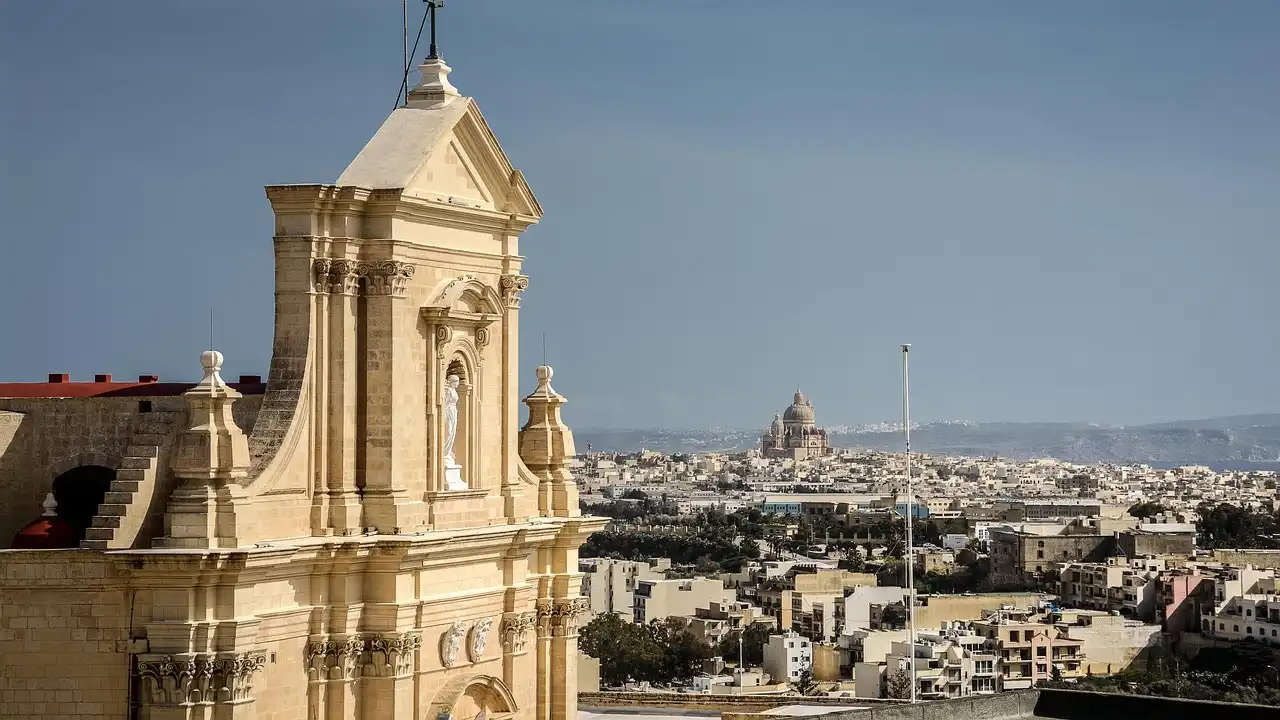
Maltese is a unique language.
It’s the only Semitic language (like Arabic and Hebrew) that is written in the Latin alphabet. This means it has a very special “math” or logic behind how words are built.
Once you understand this logic, learning vocabulary becomes much, much easier.
The secret lies in the “Root” (or l-Għerq in Maltese).
Think of Maltese words like Lego sets. You have a few core bricks that never change (the Root), and then you add other pieces around them to change the meaning.
If you’re learning Maltese as a second language, mastering roots is the single best “hack” to speeding up your fluency.
Table of Contents:
What is a Semitic root?
In English, if you want to change a verb, you usually just add an ending (like play becomes played or playing).
In Maltese, it works differently.
Most Maltese words that come from Arabic origins are built around a Root. This root is almost always made up of three consonants.
We call this the “skeleton” of the word.
These three letters carry the core meaning. No matter what vowels you put in between them, or what prefixes (letters at the start) or suffixes (letters at the end) you add, the core meaning stays related to those three letters.
Here is the golden rule:
The vowels change the time (tense) or the doer (subject), but the consonants hold the meaning.
The magic of three letters (The K-T-B example)
To show you how this works, let’s look at the most famous example used in Semitic linguistics.
The Root: K - T - B
This root has to do with writing.
Any time you see K, T, and B appear in that order in a word, it usually has something to do with books, writing, or desks.
Here is how we can change the vowels and add letters to create a whole family of words from just one root:
| Maltese Word | English Meaning | Notes |
|---|---|---|
| Kiteb | He wrote | This is the basic verb form (past tense, “he”). |
| Kitba | Writing / Handwriting | Here it becomes a noun. |
| Ktieb | Book | Still related to writing! |
| Nikteb | I write | The ‘N’ at the start marks “I”. |
| Miktub | Written | An adjective describing something. |
| Uffiċċju tal-Kitba | Office of writing (Clerk’s office) | Used in compound nouns. |
See? The K-T-B is always there, in that specific order.
Here is an example of these words in a sentence:
Kiteb ktieb fuq l-istorja ta’ Malta.
Common Maltese roots and word families
When you start learning Maltese vocabulary, try to group words by their root. This helps your brain remember them better.
Here are three very common roots you will hear every day in Malta.
1. The Root: K - S - R (Breaking)
This root deals with breaking things, fractures, or things that are broken.
| Kiser | He broke (verb) |
| Ksur | A fracture / breakage (noun) |
| Miksur | Broken (adjective) |
It-tieqa hija miksura.
2. The Root: X - R - B (Drinking)
This root is all about liquids and drinking.
| Xorob | He drank (verb) |
| Xarba | A drink (noun) |
| Xorb | Beverages / Alcohol (noun) |
Tridu xarba?
3. The Root: Ħ - D - M (Working)
This is essential for daily conversation. It covers work, jobs, and workers.
| Ħadem | He worked (verb) |
| Ħaddiem | Worker (noun) |
| Ħidma | Work / Task / Operation (noun) |
How to find the root in a dictionary
If you use a traditional Maltese dictionary (like the heavy Aquilina ones), you often cannot just look up the word alphabetically like in English.
You often have to find the Root first.
This is a skill you need to practice. To find the root of a complex word, you need to strip away the “extra” letters.
Common “extra” letters to remove:
- M at the beginning (often makes a noun or adjective, like Miktub).
- T at the beginning (often makes it feminine or “you”, or passive).
- N at the beginning (means “I”).
- a / i / u (vowels are usually just fillers).
Let’s try a practice run:
Imagine you see the word Tiftaħ.
- It implies “You open” or “She opens”.
- Remove the T (the prefix for You/She).
- You are left with f-t-a-ħ.
- Remove the vowel a.
- The Root is F - T - Ħ.
Now you can look under F-T-Ħ in the dictionary, and you will find Fetaħ (to open), Ftuħ (opening), and Tiftaħ.
Regional variations and the root
I often get asked about dialects. Does the root system change if I speak to someone from Gozo or someone from the south of Malta (like Żurrieq)?
The good news is: No, the roots do not change.
The consonants (the skeleton) stay the same. However, the vowels inside the skeleton might sound different.
This is why focusing on the root is so powerful - it helps you understand people even if their accent is thick.
Example: The root Q - B - Ż (Jumping)
- Standard Maltese: Qabeż (He jumped). The vowels are ‘a’ and ‘e’.
- Some Village Dialects: Might sound more like Qobeż or Qebeż.
The vowel sound shifts, but the Q - B - Ż sound remains distinct. If your ear listens for those three consonants, you will understand the meaning regardless of the regional accent.
Note: In some dialects, the letter Q (the glottal stop) is pronounced as a hard K. So in some parts of Gozo, Qabeż might sound like Kabez. But the pattern is still there!
Don’t let the grammar scare you. Maltese is logical.
Once you stop looking at the whole word and start looking for the three root letters, the language opens up. You will start guessing the meanings of words you have never seen before, just because you recognize the root.
To recap:
- Roots are usually 3 consonants.
- Roots carry the meaning.
- Vowels carry the tense.
- Roots help you navigate dialects.